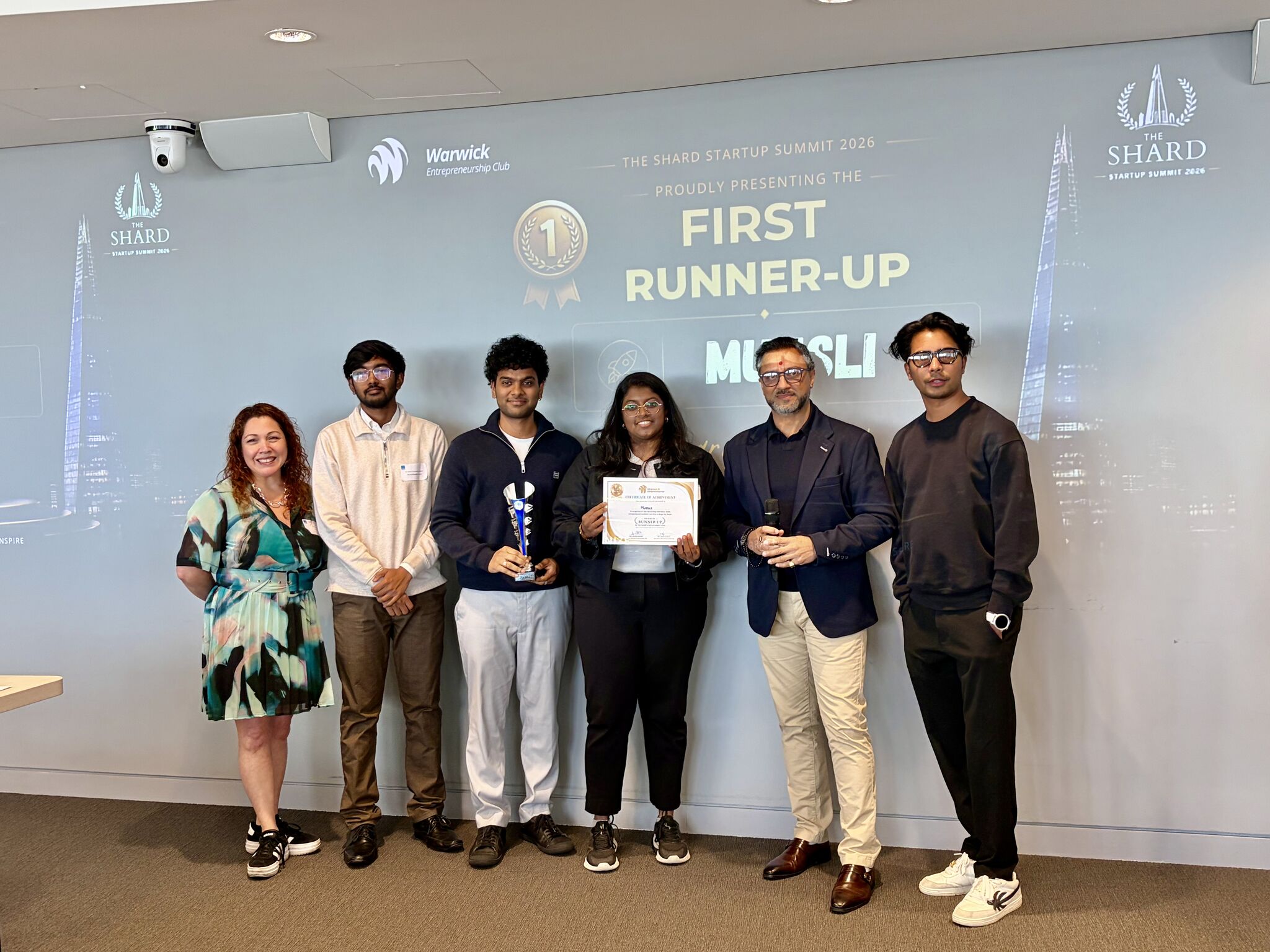
In March, we built Muesli in three days at the Google x NatWest hackathon and finished Top 4 out of 26 teams. I ended that post saying we’d walked away with a product worth building further. The Shard Startup Summit 2026 was the first test of whether we meant it.
We finished as first runner-up, out of eight teams.
The summit
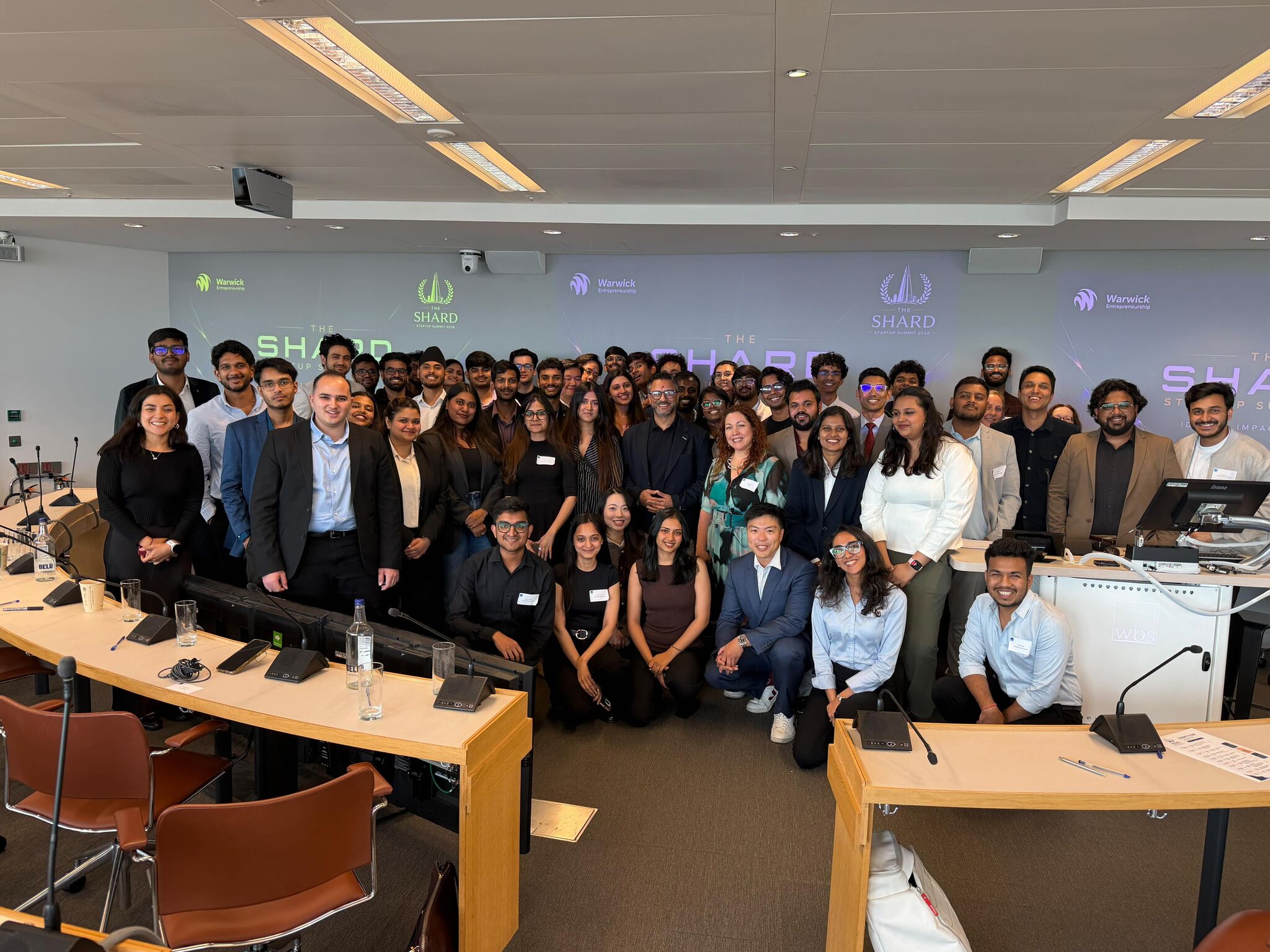
The summit was organised by the Warwick Entrepreneurship Club and held at The Shard, in the WBS London space. The morning was panels: how companies scale, how founders turn investor interest into actual commitment, and where AI is heading in fintech. The room had people worth listening to: Ambarish Mitra, Simon Barnes, Alexander McLeod, Sanjiv Patel, Santhosh Palavesh, and Karen Rudich, with Harry Nijjar moderating. Then eight teams pitched to a panel of investors and industry leaders.
Pitching a business
Pitching Muesli this time felt different from the hackathon, and the difference is worth writing down. At Google, we were pitching a build: here’s what we made in three days, here’s the problem it solves. At the summit, we were pitching a business. Same product, but the questions change. Who pays for this? What happens when a bigger platform copies it? Why you, why now? A demo doesn’t answer any of that. You have to.
The pitch itself hasn’t changed at its core: job searching shouldn’t need five different tools and a pile of spreadsheets just to stay organised. Applications in one place, deadlines in one place, follow-ups in one place. Muesli does the organising so you can spend the time actually applying.
The judges’ question
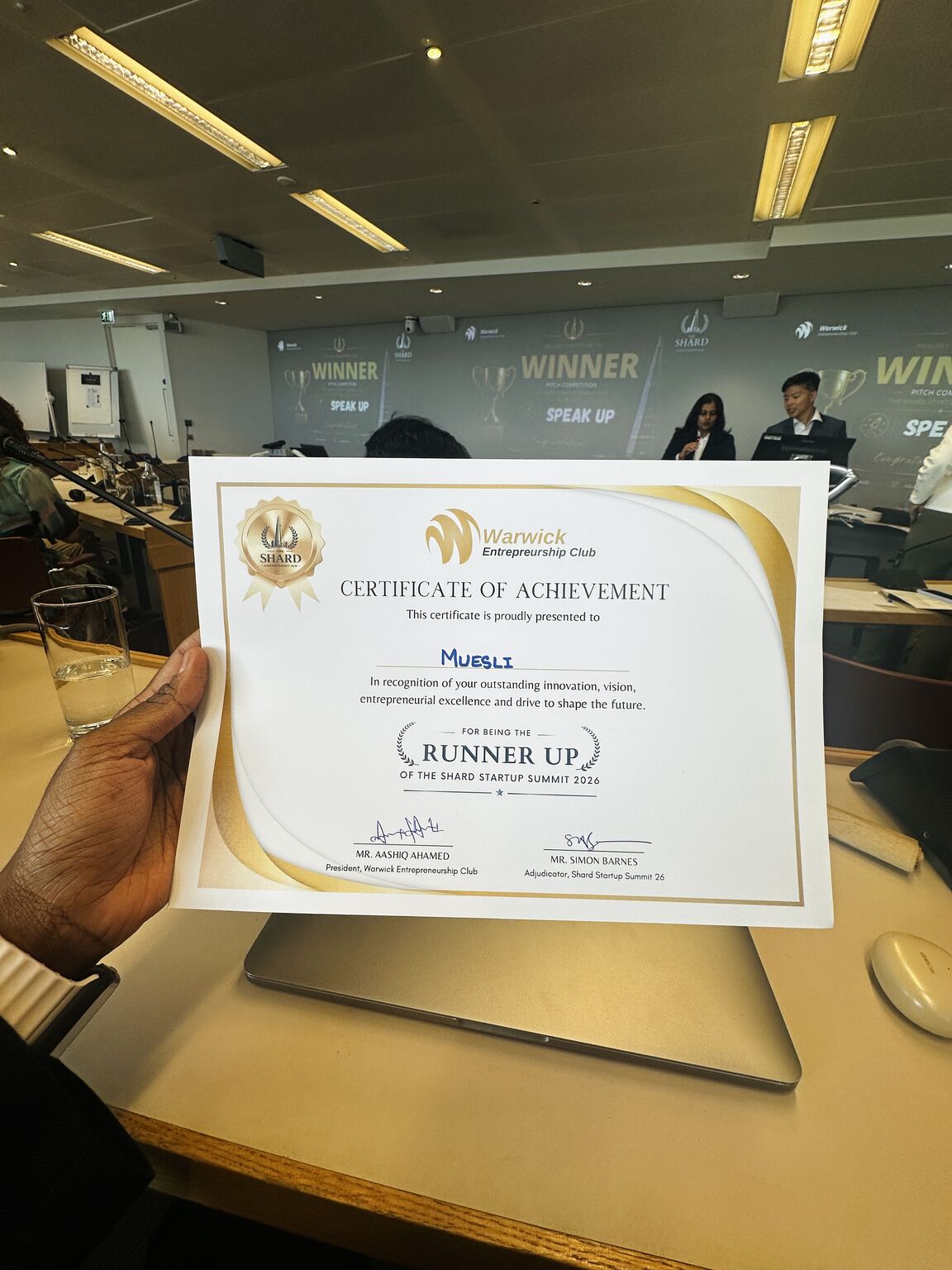
During the Q&A, one of the judges asked us a question I have not stopped turning over:
Why is this not already in the market?
a judge at the Shard Startup Summit 2026, during our Q&A
I’ve thought about that question a lot since. On one hand, it’s the nicest thing a judge can say: nobody in the room needed convincing that the problem exists. Everyone has either lived a messy job hunt or watched someone go through one. The gap is visible. On the other hand, the question has a second edge: if the gap is that obvious, you need a serious answer for why nobody has filled it yet, and why you’re the team that will. We have a partial answer today. Making it a complete one is the work ahead.
Where this goes
Muesli started as a three-day hackathon project. Two competitions later, it has a finalist finish, a runner-up trophy, and a growing list of hard questions we want to answer. That feels like the right direction.
Originally shared as a short post on LinkedIn.