Olympia, London. Monday 8 June 2026.
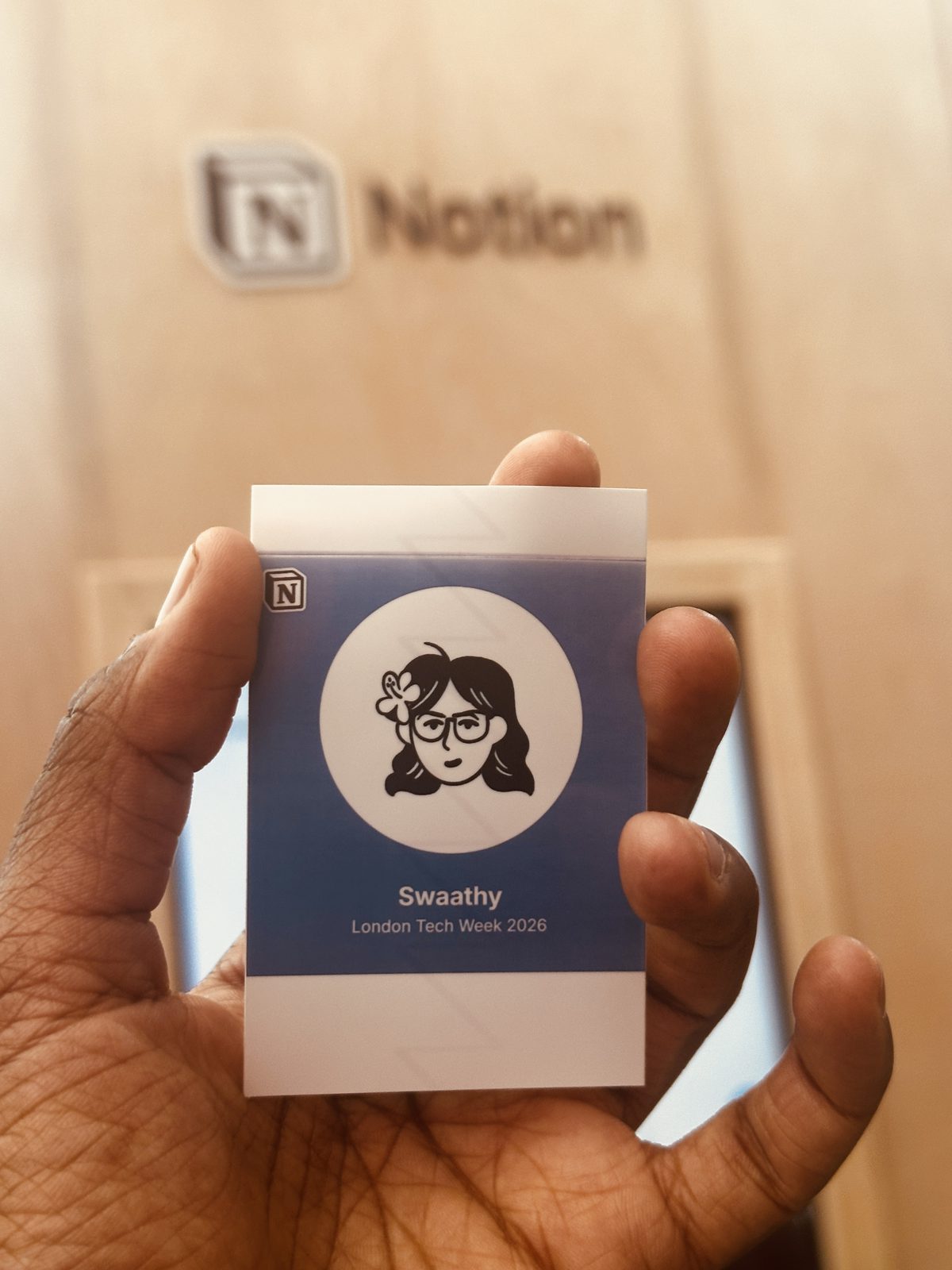
It rained that morning the way London likes to when you have somewhere important to be: steadily, without drama, and without the slightest hint of an apology. I took the Victoria line from Euston and threaded my way across the city to Olympia, walking the last stretch with my collar up against the drizzle. When I got there I queued to collect my badge before heading in, slightly too early and quietly thrilled to be there at all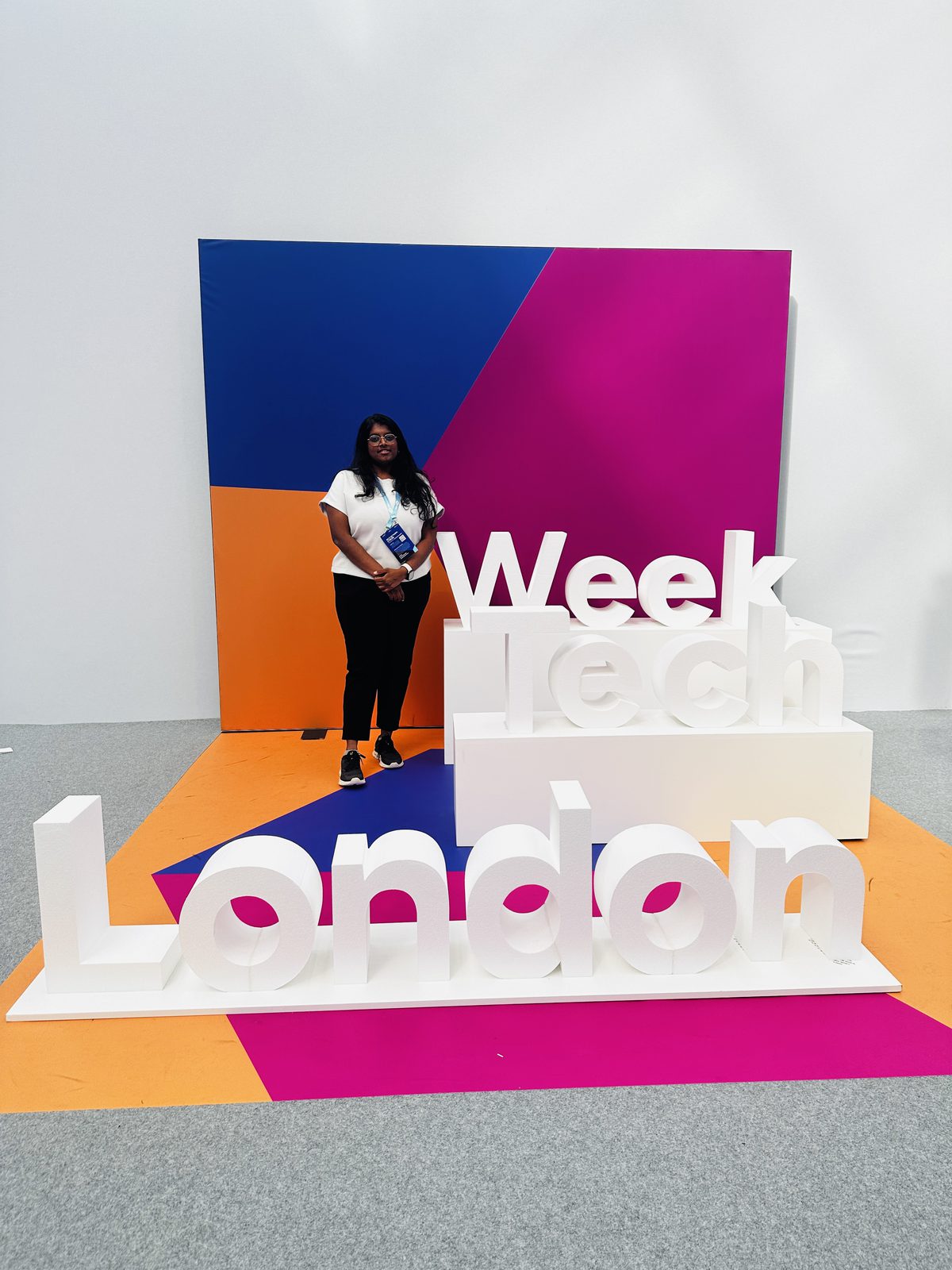 .
.
By the time I got home my phone told me I had walked a little over sixteen thousand steps. I believe it. London Tech Week is not an event you attend so much as one you wade into, and Day One, the opening Monday of the festival, is the deep end. Tens of thousands of people, a building full of stages and stands and startups, and that particular charge in the air that comes from a lot of ambitious people occupying the same space at the same time.
I want to write this one down properly. Partly because I know I will want to come back to it, and partly because a day like this deserves more than a camera roll and a forgotten hashtag. So here is the long version.
The room I kept coming back to
Of all the stages at Olympia, the one that held me longest was the EQL:Lounge, hosted by Tech She Can and powered by EQL:HER. It gave the floor to a steady run of women who had genuinely built things, talking with a candour that the bigger keynote stages rarely allow.
I sat in on three sessions there, and each left me with at least one line I have not stopped turning over.
Female Leaders Driving Workplace Inclusivity
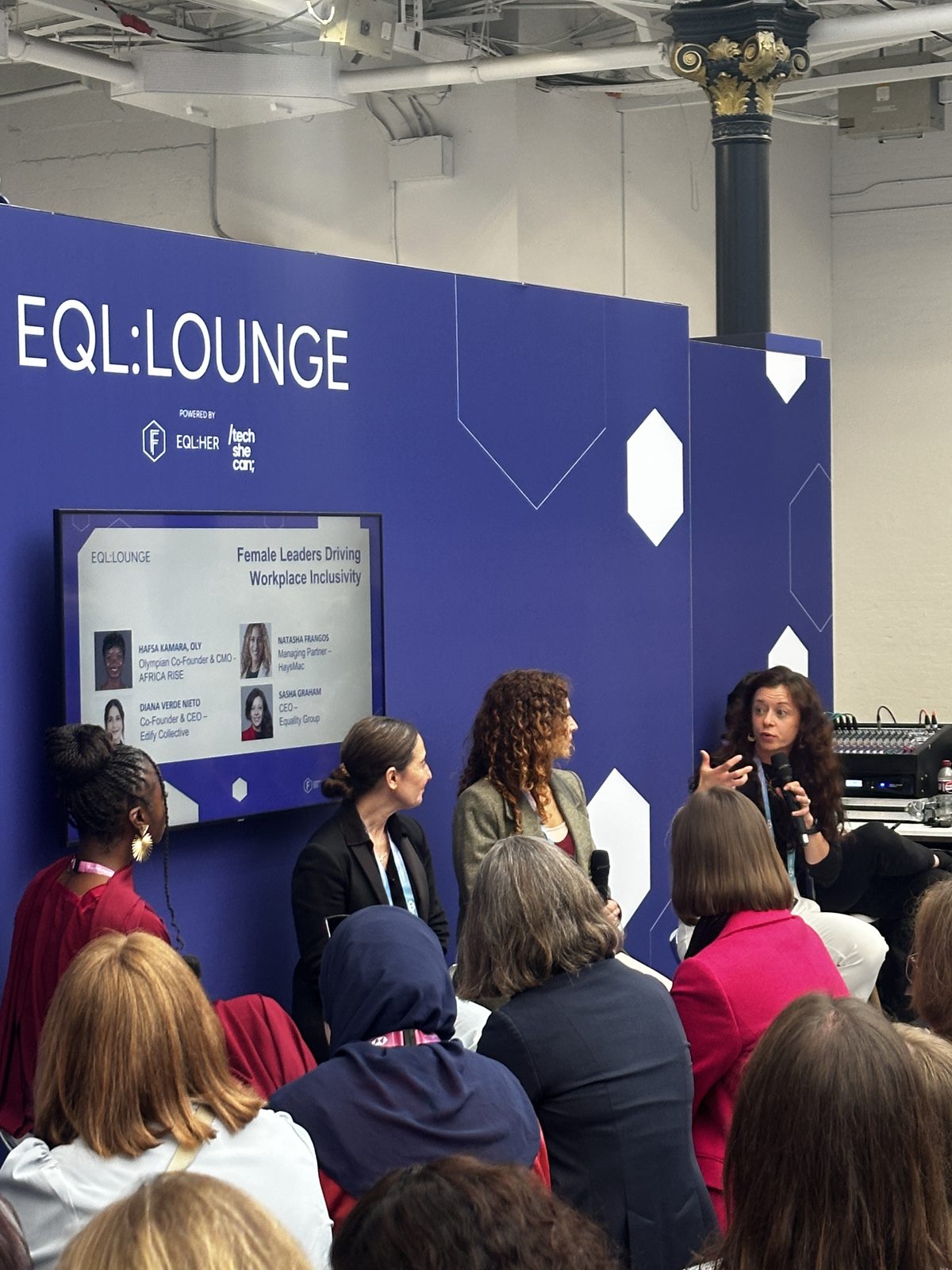
The first panel brought together Natasha Frangos, Managing Partner at HaysMac; Sasha Graham, CEO of Equality Group; Hafsatu Kamara, an Olympian and Co-Founder and CMO of Africa Rise; and Diana Verde Nieto, Co-Founder and CEO of Edify Collective. The throughline was inclusivity as something you build into the everyday mechanics of an organisation, not something you announce once a year and photograph. I came in to listen rather than to take notes, and mostly I just absorbed the tone in the room, which was warm, direct, and refreshingly unbothered with corporate gloss.
Sustaining Career Growth in Enterprise
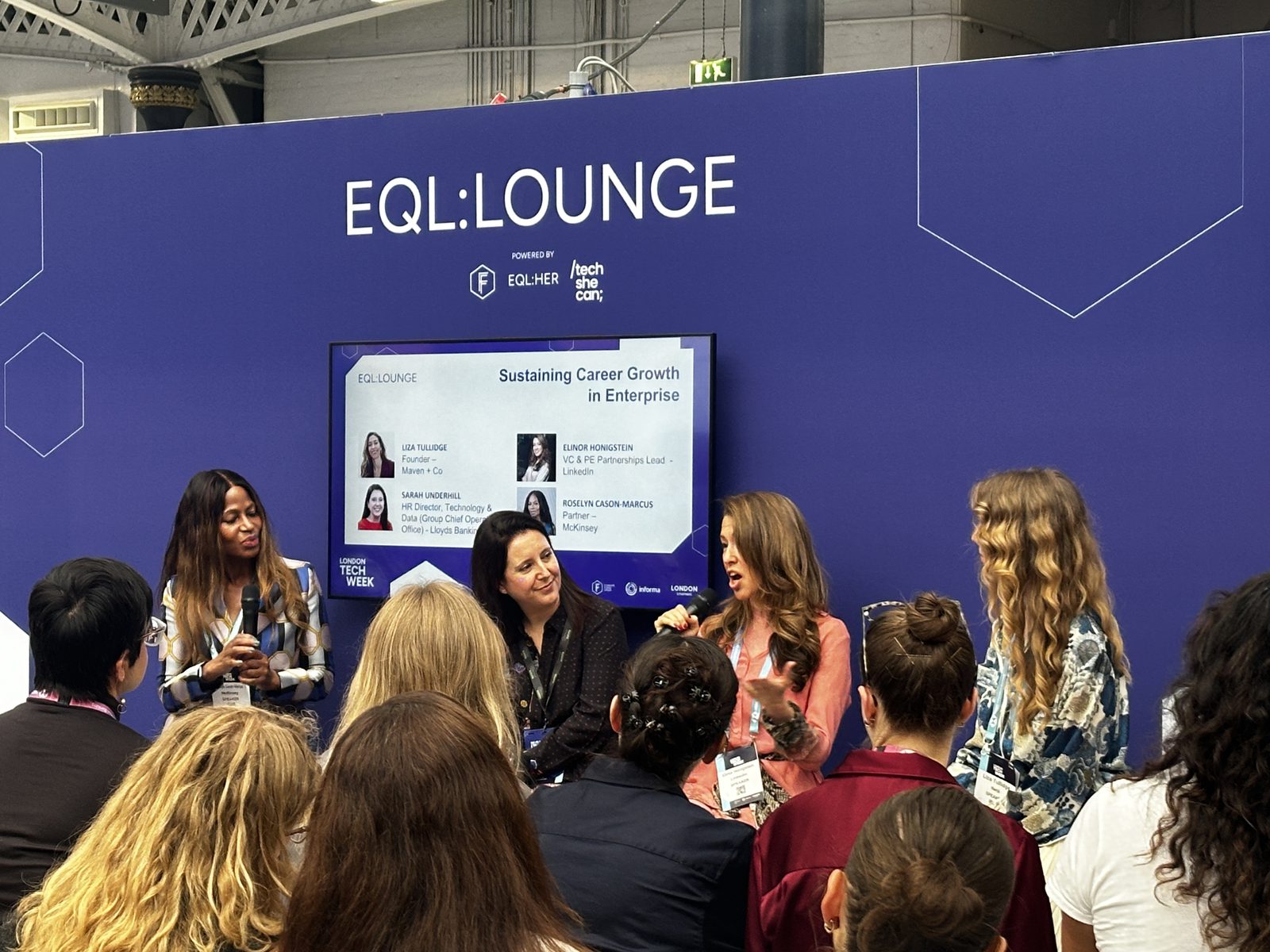
The second panel was the one I scribbled the most about. On stage were Liza Tullidge, Founder of Maven and Co; Sarah Underhill, HR Director for Technology and Data within the Group Chief Operating Office at Lloyds Banking Group; Elinor Honigstein, VC and PE Partnerships Lead at LinkedIn; and Roselyn Cason-Marcus, a Partner at McKinsey.
Two ideas have stayed with me.
Elinor Honigstein talked about visibility, and specifically about the habit of appreciating positive behaviour out loud. Her point landed because it was almost embarrassingly obvious once she said it. We are deliberate about positive reinforcement in nearly every other part of our lives, and then we walk into work and quietly assume people know they are doing well. We forget to say it. Recognition is cheap, it is renewable, and we ration it as if it were scarce.
Roselyn Cason-Marcus reframed career growth in a way that stuck with me. She described progression less as a ladder and more as informational outreach, the slow, deliberate work of learning from people and being learnt from in return. And she said to think of yourself as a luxury brand: be considered about how you show up, because how you show up compounds.
Somewhere in that conversation, the Google initiative I Am Remarkable came up, which exists more or less to give people, and women in particular, permission to say plainly what they are good at. It is a small thing that quietly fixes a very common problem.
Maintaining a ‘Builder’ Mentality as a Senior Leader
The third was a fireside between Erinn Leahey, Partner at Founders Keepers, and Deirdre Byrne, Head of Sales at Sierra. The theme was how you stay a builder once you are senior enough that the system would happily let you stop building.
They talked about intelligence and coachability, and the gap between the two. Intelligence is the easy one to celebrate. Coachability is the one that actually keeps you moving, because it means you are still willing to be wrong in public and adjust. And then Deirdre Byrne reached for the well-worn rocket-ship line:
If you're offered a seat on a rocket ship, don't ask what seat. Just get on.
Eric Schmidt's advice to Sheryl Sandberg, retold on stage by Deirdre Byrne
Hearing it again at the right moment reminded me why it has survived: when something is genuinely taking off, the seat number stops mattering.
The cleverest thing on the floor
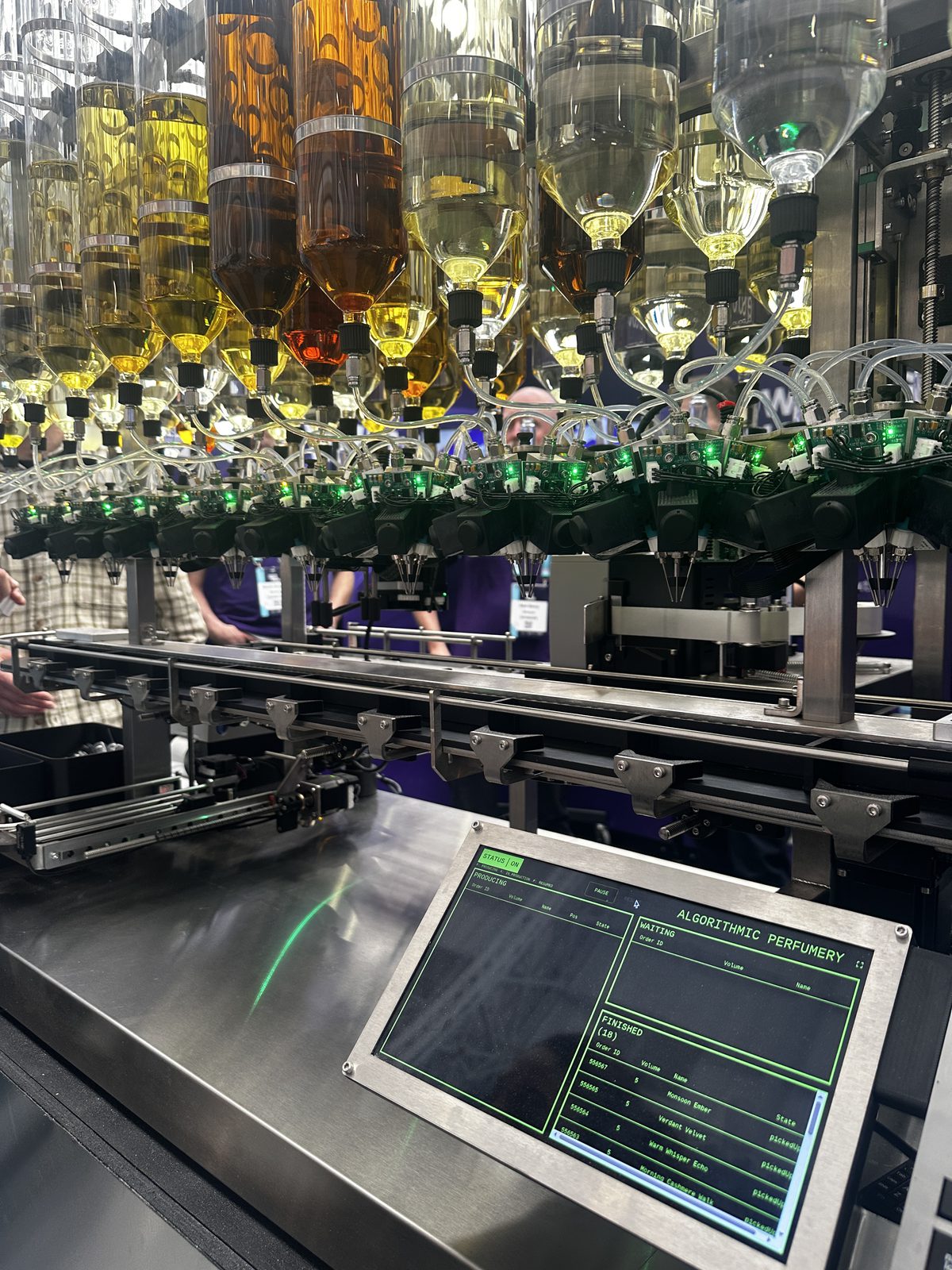
If the EQL:Lounge was where I did my thinking, the stands were where I did my wandering, and the cleverest one I found had no business being clever, because on paper it had nothing to do with what its owner actually sells.
Ensono is an IT advisory and managed-services firm. Their stand had nothing obviously to do with that, and that was rather the point. They had built an AI that designs you a custom perfume. You answer a few simple questions, how you want to feel when you walk into a room, the kinds of places you spend your time, the impression you want to leave, and the system turns your answers into a scent made just for you. What made it work was not the technology on its own. It was that real people were there to walk you through it and to explain how it linked back to what Ensono actually does. An IT firm with no perfume anywhere in its real business had built the most memorable stand of my day.
I keep coming back to why it worked. It worked because it was personal. It took a pile of small, almost throwaway answers and turned them into something tangible that felt made for you, which is exactly the thing AI is genuinely good at and exactly the thing most companies forget to use it for. Personalisation done well does not feel efficient. It feels like being seen.
Forty-five minutes, a roomful of ideas
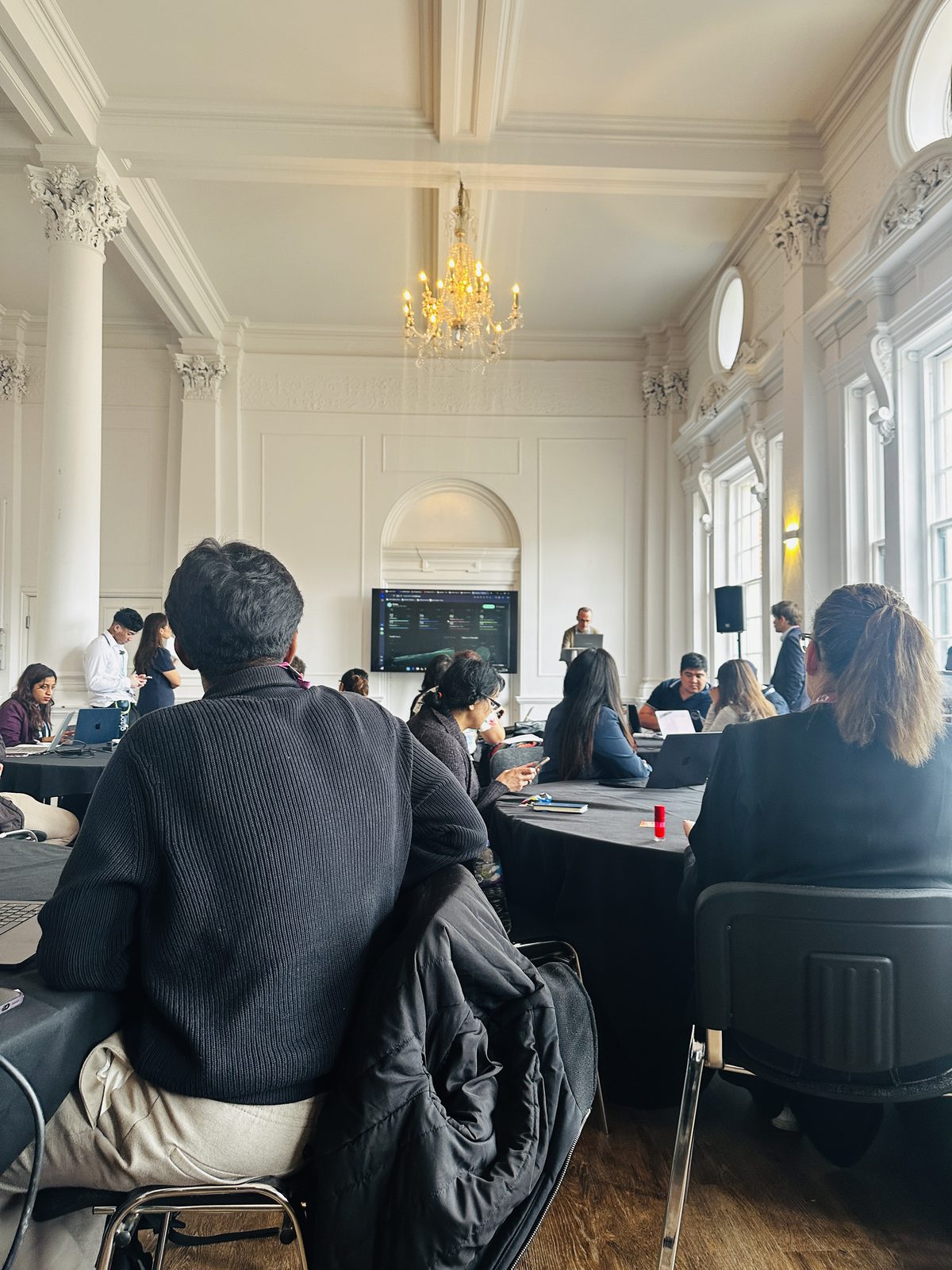
I have a habit at events like this. However good my intentions are about networking and note-taking, I always end up drifting towards wherever something is actually being made. So of course I found the hackathon.
Lovable ran a 45-minute one, and there is something genuinely lovely about watching ideas go from a sentence to a working thing inside the length of a lunch break. One-minute pitches, a timer, a roomful of people deciding that the fastest way to explain an idea is to build it. I did not walk away with a product of my own, but I walked away reminded of why I love this part of tech more than almost any other.
The distance between thinking of something and seeing it run has never been shorter, and watching that distance collapse in real time, in a busy hall, with the clock running, is its own small thrill.
Who else was in the room
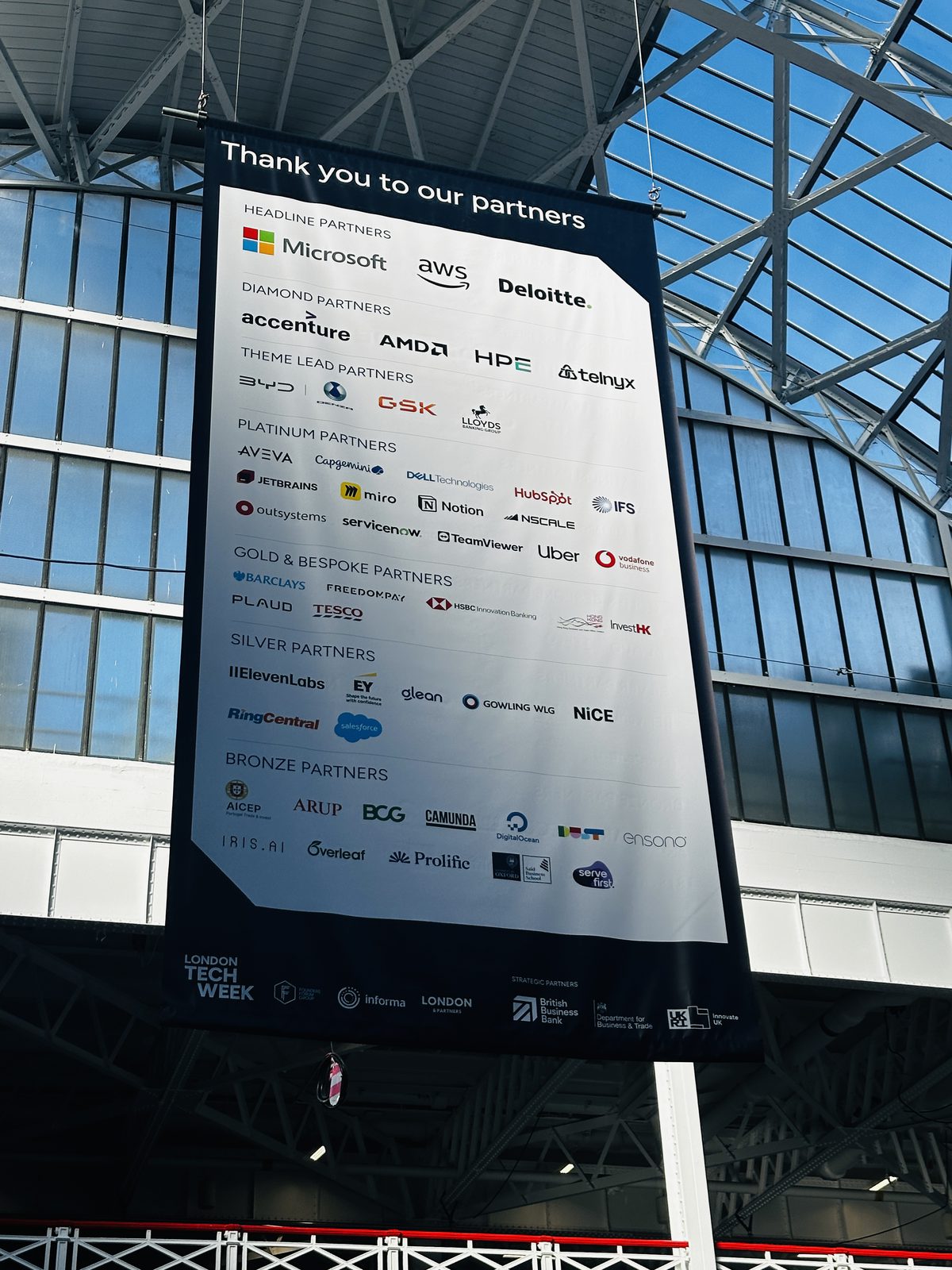
Here is the part of the day I did not expect to move me, and did.
As I walked the floor, I kept passing government-backed delegations. Tunisia. The Philippines. Uzbekistan. Others beyond them. Each was there with the same clear and confident message: the talent is here, we are open, come and find us. Nations turning up at a London hall to say, in effect, that ambition is global and they intend to be part of where it goes.
That landed for me in a specific way, because I am someone building a career across borders myself. I know what it is to be the international one in the room, to carry a story that starts in one country and is trying to take root in another. Seeing entire countries lean into that same idea, openly and without apology, made the whole festival feel less like a London event and more like a meeting point. It was, if I am honest, the real headline of my day.
In a similar spirit, I spent a little time with the team from Innovator International, whose entire focus this year was the routes that help founders and graduates build something in the UK. When you are early in a cross-border journey, the people who treat that journey as an opportunity rather than a complication are worth remembering.
The conversations in the air
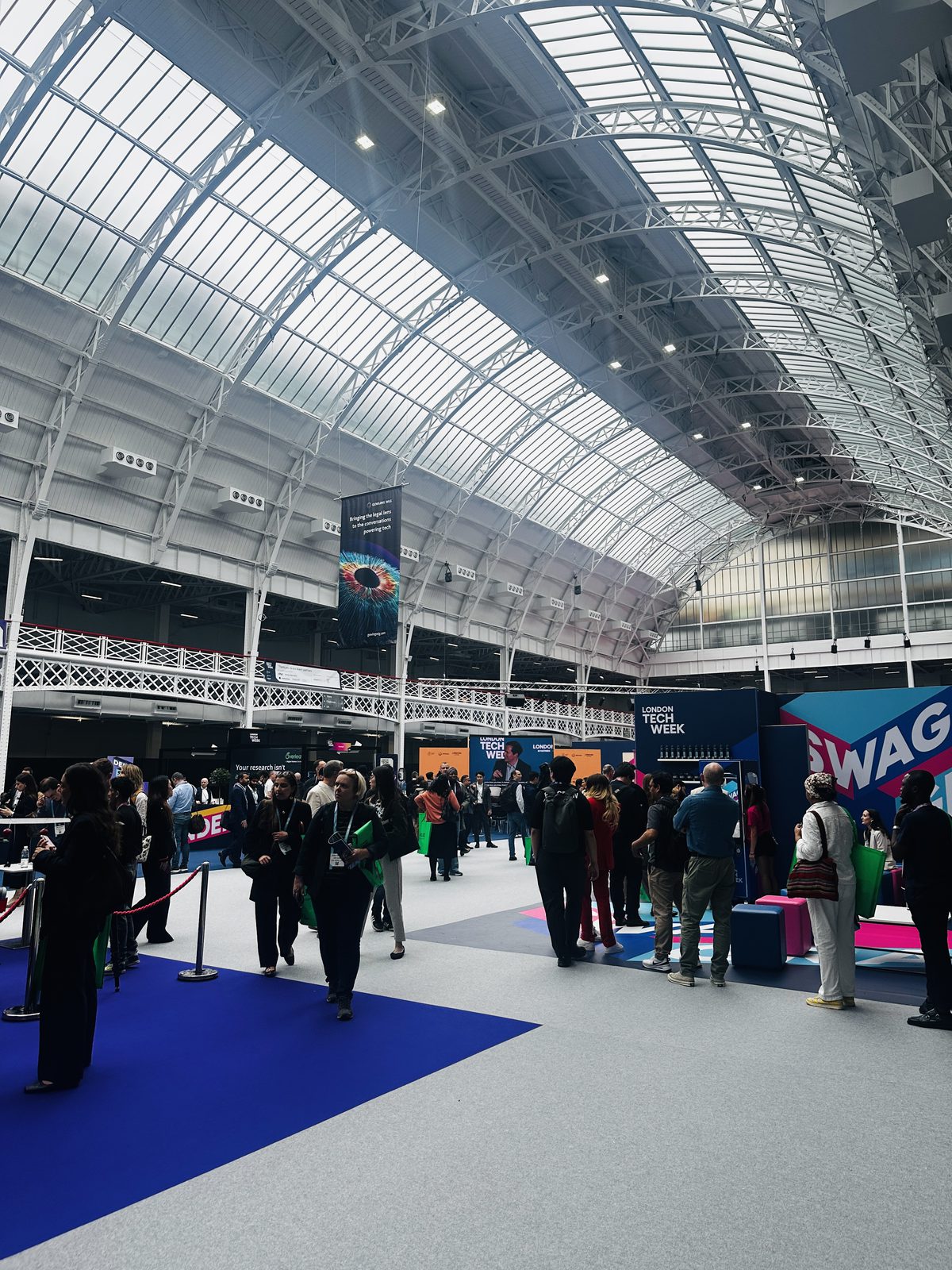
So much happens at London Tech Week at once that catching all of it is simply impossible. Talks, panels, demos and stands run in parallel across the building, and for every session you sit in there are several more you walk straight past. You make your peace with missing things. What you cannot miss, though, is the handful of ideas that everyone seems to be talking about at the same time.
The one that stayed with me, even though I only caught it secondhand, was about taste. The argument, which I kept hearing traced back to Notion’s Ivan Zhao, is that as AI takes over more of the doing, the thing that sets people apart is judgement: the ability to tell good from bad, and to know which version is the right one. And taste like that is not something you are simply born with. You build it slowly, by paying attention to good work until the difference becomes obvious.
These were the hot takes that seemed to be everywhere this year, the ones I would happily have spent another whole day chasing down. A festival is partly a barometer, and this one was reading clearly: the question has quietly shifted from whether to use AI to how to use it with judgement, and who gets to be in the room while that gets decided.
The small joys
A day this long runs on small mercies, and London Tech Week is generous with them. Notion handed out hot chocolate that was genuinely, suspiciously good. AWS had a Cocoloco smoothie that I would happily queue for again. The green tote bag that what felt like the entire festival was carrying turned out to be sponsored by Plaud, whose recording devices I had a proper look at and which are alarmingly thin. And I came away with a London Tech Week water bottle that has already earned its place on my desk as a small, slightly smug souvenir of a very good day.
What I took home
I think I will remember three things from this Monday.
The first is that the human element is not going quietly. It turned up everywhere I looked, in the staff on the Ensono stand who turned a clever toy into a real idea, in the reminder that recognition has to be said out loud to count, in every panel that treated technology as something people do to each other rather than something that simply happens. The interesting work, again and again, was in how the human and the machine sit together, not in replacing one with the other.
The second is that personalisation is everything, and most of us are still using a fraction of what it can do. A perfume taught me that, which I did not have on my London Tech Week bingo card.
The third is simpler and harder. Being in the room matters. Visibility matters. Saying plainly what you are good at, the I Am Remarkable of it all, matters. Coachability will carry you further than cleverness. And when something is genuinely taking off, you do not ask which seat.
I left Olympia with sore feet, a notebook full of names to follow up with, a head full of half-formed ideas, and the clear and slightly giddy sense of why I want to build my career in exactly this space. There is so much happening, and so much still to learn and get right, and I would rather be in the middle of that than anywhere else.
If there is one thing days like this keep teaching me, it is that you simply have to show up. You rarely know in advance what a single conversation will turn into. A name on a badge becomes a referral. A two-minute chat at a stand becomes an introduction you could never have engineered. None of that happens from your sofa. So you put on the slightly-too-early face, you brave the rain, and you show up.
If you were at London Tech Week too, I would genuinely love to hear what stood out to you. And if you are building something in product, in fintech, or anywhere AI is being put to honest use, my inbox is open. I am always happy to talk.
Onwards, and probably with more comfortable shoes next time.